Travel Guide
03
Jul
Places to Visit in Cappadocia 2026 — Valleys, Underground Cities & Viewpoints | Temren Travel
Bottom Line Up Front: Cappadocia is not a single attraction — it is a 5,000-square-kilometer UNESCO World Heritage region packed with fairy chimney valleys, 200+ underground cities, rock-hewn Byzantine churches, and ancient cave settlements that have been continuously inhabited for over 3,500 years. This 2026 guide covers every major place to visit across both the northern and southern Cappadocia routes — from the iconic panoramas of Uchisar Castle to the 60-meter depths of Derinkuyu — with practical logistics, entry fees, transport details, and local tips that ensure you spend your days exploring rather than figuring out where to go next.
| Cappadocia Places to Visit — Quick Reference (2026) | |
|---|---|
| Total Area | Approximately 5,000 km² across Nevsehir, Kayseri, Aksaray, and Nigde provinces |
| UNESCO Status | Goreme National Park and the Rock Sites of Cappadocia — inscribed 1985 |
| Major Towns | Goreme, Uchisar, Urgup, Avanos, Ortahisar, Mustafapasa, Cavusin |
| Underground Cities Discovered | Over 200; 6 open to the public (Derinkuyu, Kaymakli, Ozkonak, Mazı, Ozluce, Tatlarin) |
| Fairy Chimney Valleys | 15+ named valleys; top 5 are Love, Pasabag, Devrent, Pigeon, and Rose/Red |
| Minimum Recommended Stay | 2 full days (Red Tour + Green Tour); 3-4 days for a relaxed, comprehensive visit |
| Best Time to Visit | April-June and September-October for pleasant weather and manageable crowds |
| Museum Pass | Museum Pass Cappadocia covers 10+ sites for 130 EUR (valid 3 days); available at Goreme Open-Air Museum |
Cappadocia Places Map — Understanding North vs South Cappadocia
Before diving into individual places, you need to understand the geography. Cappadocia's attractions naturally divide into two clusters — northern and southern — separated by roughly 40 to 80 kilometers of volcanic plateau. Every guided tour, every self-drive itinerary, and every hotel concierge recommendation operates on this north-south framework, and knowing it before you arrive will save you from the common mistake of trying to visit Derinkuyu and Pasabag on the same morning.
Northern Cappadocia encompasses the dense cluster of attractions within a 15-kilometer radius of Goreme town. This is the postcard Cappadocia — the fairy chimney valleys, the rock-hewn Open-Air Museum, the castle-topped ridge of Uchisar, and the pottery workshops of Avanos. The northern circuit includes Goreme Open-Air Museum, Uchisar Castle, Love Valley, Pasabag (Monks Valley), Devrent (Imagination Valley), Zelve Open-Air Museum, Pigeon Valley, and Avanos. Distances between these sites are short — typically 5 to 15 minutes by car — meaning you can visit four or five in a single well-planned day. This is the Red Tour route, and it is the right choice if you have only one day in Cappadocia.
Southern Cappadocia spreads across a wider area, with driving distances of 30 to 90 minutes between sites. The southern circuit features the underground cities of Derinkuyu and Kaymakli, the Ihlara Valley with its 14-kilometer gorge and riverside rock churches, Selime Monastery carved into a volcanic peak, and the Seljuk-era caravanserais that once sheltered Silk Road traders. This is the Green Tour route, and it demands a full day — you cannot combine it meaningfully with northern sites without rushing through every stop. The terrain here is greener, more agricultural, and less visited by the selfie-stick crowd that clusters at Love Valley at sunset.
Which should you visit? If you have two days, do both — Red Tour on day one, Green Tour on day two. If you have only one day, the northern circuit delivers the densest concentration of iconic Cappadocia imagery and requires less time in transit. If you have three or more days, add a third "leisure day" for the less-visited gems: the Greek mansions of Mustafapasa, the rock-cut monasteries of the Soganli Valley, or a pottery workshop in Avanos where you throw your own bowl on a kick-wheel.
Goreme — The UNESCO Heart of Cappadocia
Goreme is Cappadocia's de facto capital — a town of roughly 2,000 permanent residents carved directly into a volcanic hillside, surrounded on all sides by fairy chimneys, and crowned by one of the most important collections of Byzantine religious art in Anatolia. If you visit only one place in Cappadocia, Goreme holds the strongest claim.
Goreme Open-Air Museum: This is the essential stop. A monastic complex occupied continuously from the 4th to the 13th century AD, the Open-Air Museum contains over 30 rock-hewn churches, chapels, and monastic living quarters clustered within a compact valley 1.5 kilometers east of downtown Goreme. The highlight is the Dark Church (Karanlik Kilise), whose 11th-century frescoes — depicting the life of Christ in luminous lapis lazuli blue and cinnabar red — survived centuries of neglect in near-perfect condition precisely because the church has only one small window and spent most of its history in literal darkness. Entry costs 20 EUR for the main museum complex and an additional 6 EUR for the Dark Church. Budget 90 minutes minimum; two hours is comfortable.
Tokali (Buckle) Church: Located 50 meters outside the main museum gate and included in the museum ticket, Tokali Church is the largest rock-cut church in Cappadocia. Its nave walls are covered in a continuous narrative fresco cycle — one of the most complete surviving examples of 10th-century Byzantine painting in Turkey — depicting scenes from the life of Christ in chronological sequence. The blue pigment here predates the Dark Church by roughly a century and represents an earlier, more provincial artistic tradition. Most group tours skip Tokali Church because it sits outside the main complex. Do not make the same mistake; it is arguably as significant as anything inside the museum walls.
Goreme Town: Beyond the museum, Goreme itself rewards exploration. The town is built into and atop a hillside honeycombed with cave dwellings, many now converted into boutique hotels. Walk the back lanes at dusk, when the call to prayer echoes off the tuff cliffs, and the warm light of hundreds of cave-hotel windows creates a scene that feels millennia removed from the modern world. The sunset viewpoint above the town — a 15-minute uphill walk from the central mosque — offers a 270-degree panorama encompassing Goreme, Uchisar Castle on the horizon, and the Rose and Red Valleys spreading to the south.
Uchisar — The Highest Panorama in Cappadocia
Uchisar Castle is not a castle in the European sense — there are no crenellations, no drawbridge, no great hall. It is a 60-meter-high volcanic rock outcrop that Byzantine inhabitants hollowed into a natural fortress, carving rooms, tunnels, staircases, and storage chambers through its entire mass over centuries of occupation. Today, climbing to the summit via a series of steep rock-cut steps delivers the single highest and most expansive panorama in Cappadocia — a 360-degree view encompassing Goreme, the fairy chimney valleys, the snow-capped summit of Mount Erciyes (3,917 meters) 70 kilometers to the east, and on clear days the Taurus Mountains 150 kilometers to the south.
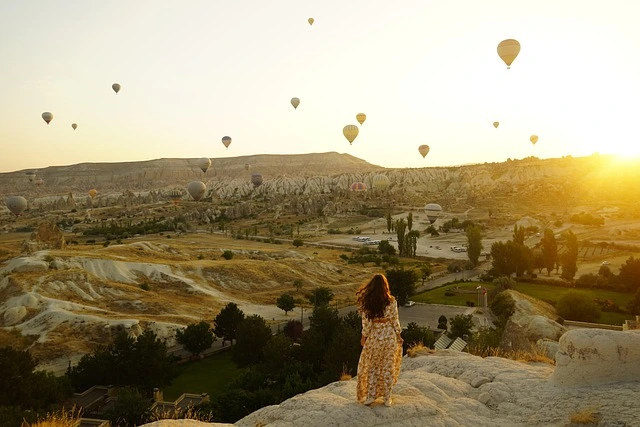
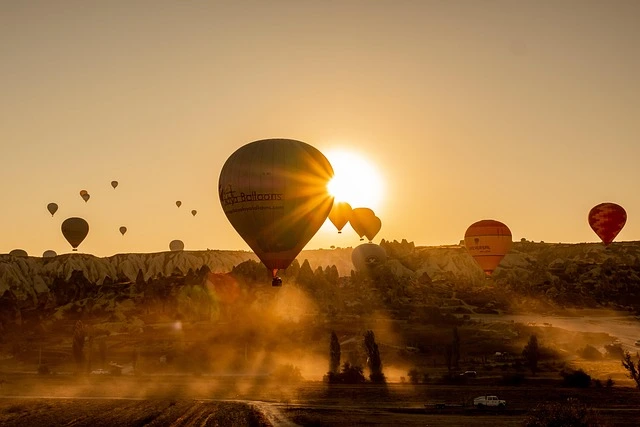
The climb to the top takes roughly 10 to 15 minutes from the base and requires moderate fitness — the steps are uneven, carved by hand into soft volcanic tuff, and worn smooth by countless feet. Handrails are present on the steeper sections. Entry costs 6 EUR or is covered by the Museum Pass Cappadocia. The summit viewing platform is compact and can feel crowded in peak season, but the view is worth every jostle. Sunrise here is spectacular, with hot air balloons rising from the valleys below, and far less crowded than sunset.
Pigeon Valley Trailhead: Uchisar marks the western terminus of Pigeon Valley — a 3.8-kilometer hiking corridor that connects Uchisar to Goreme through a narrow gorge lined with thousands of dovecotes carved into the cliff faces. The trailhead is a 5-minute walk downhill from Uchisar Castle's southern base. Hiking toward Goreme is the recommended direction — you descend gently for most of the route, the morning light illuminates the canyon walls, and you end in Goreme town center with cafes and restaurants at hand. For a comprehensive guide to this hike, see our dedicated Pigeon Valley guide below.
Explore Uchisar → Read: Pigeon Valley Guide →
The Fairy Chimney Valleys — Cappadocia's Open-Air Sculpture Gallery
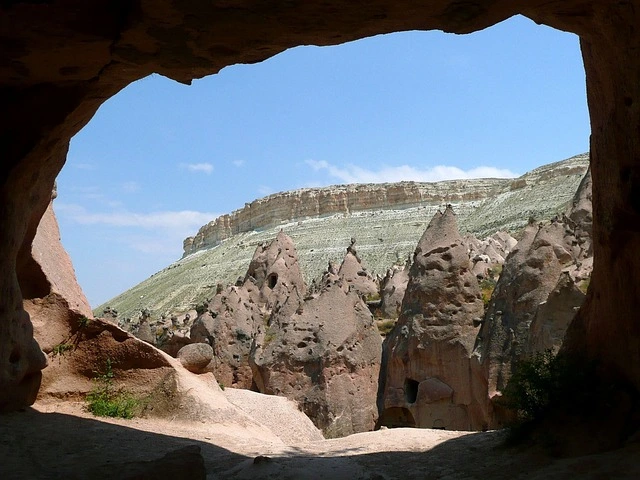
The fairy chimney valleys are the reason Cappadocia appears on travel magazine covers. These surreal landscapes — towers of soft volcanic tuff capped with harder basalt, sculpted by millions of years of wind and water erosion — spread across the region in distinct clusters, each valley with its own geological character, hiking trails, and photographic personality. Below are the five essential valleys, ranked from most iconic to most overlooked.
Love Valley — Tallest Chimneys and Sunset Magic
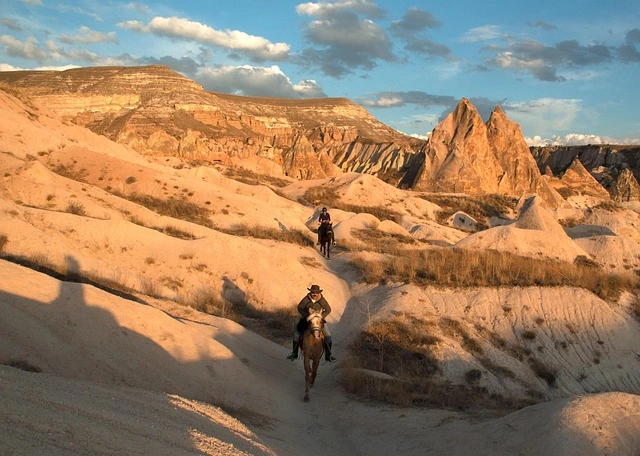
Love Valley (Ask Vadisi) contains the tallest and most distinctively shaped fairy chimneys in Cappadocia — phallic pillars rising 25 to 40 meters from the valley floor, their basalt caps silhouetted against the western sky. The 4.9-kilometer trail between Goreme and Uchisar is the region's most accessible moderate hike, requiring no technical skill and delivering the most dramatic sunset photography in Cappadocia. The valley floor, once cultivated as vineyards by Goreme's Greek Orthodox community before the 1923 population exchange, is now a patchwork of walking paths and wild almond groves. ATV and Jeep safaris use dedicated off-road tracks through the valley, making this the only major fairy chimney valley accessible by motorized tour as well as on foot. Free entry, open 24 hours, best visited 60 to 90 minutes before sunset.
Read: Full Love Valley Guide →
Pasabag Monks Valley — Multi-Headed Mushroom Chimneys
Pasabag (also called Monks Valley, or officially Pasha's Vineyard) is the single most photographed fairy chimney site in Cappadocia — and for good reason. The valley contains a dense cluster of mushroom-shaped formations, several of which feature two or even three basalt caps stacked on a single tuff column, a geological rarity caused by multiple phases of volcanic deposition and differential erosion. The most famous chimney houses a small hermit cell dedicated to St. Simeon Stylites, the 5th-century ascetic who spent 37 years living atop a pillar in Syria — followers carved this isolated chapel high inside the chimney in homage to his extreme solitude. Pasabag is a compact, paved site requiring no hiking; a complete visit takes 30 to 45 minutes. Entry is free, though parking costs 20 TL in peak season. Located 5.5 kilometers northeast of Goreme on the road to Zelve. Tour buses arrive heavily from 10:00 AM to 3:00 PM — visit early (before 9:00 AM) or late (after 4:00 PM) for the best experience.
Devrent Imagination Valley — Nature's Rock Zoo
Devrent Valley differs from every other Cappadocia valley in one crucial respect: it has no rock churches, no hermit cells, no Byzantine frescoes, and no human-carved structures of any significance. What Devrent has instead is a collection of wind-sculpted rock formations whose silhouettes — with a modest assist from human imagination — resemble animals, objects, and figures. The most famous is the "camel rock," a formation that genuinely looks like a kneeling dromedary, right down to the neck, hump, and muzzle. Others suggest a dolphin, a seal, a snail, a pair of kissing birds, and — most famously — a pillar that from one angle resembles the Virgin Mary holding the infant Christ. This last formation has lent Devrent its alternative name: Imagination Valley.
Devrent's appeal lies in its informality. There are no entrance gates, no ticket booths, no marked trails — just a broad, sandy-floored valley surrounded by fantastical rock shapes. Children especially love Devrent, turning the valley into a natural game of "what do you see?" A visit takes 30 to 45 minutes; combine it with Pasabag (4 kilometers away) and Zelve (6 kilometers away) for a complete northern valley morning. Free entry, parking available on the roadside. Located 8 kilometers northeast of Goreme on the Avanos-Zelve road.
Zelve Open-Air Museum — Quieter, Richer, More Immersive
If Goreme Open-Air Museum feels crowded and curated, Zelve is its wilder, more atmospheric sibling. Located 10 kilometers northeast of Goreme at the terminus of a narrow valley road, Zelve was a functioning village until 1952, when erosion rendered the cave dwellings too unstable for habitation and the Turkish government relocated residents to nearby Aktepe (now Yeni Zelve). What remains is a sprawling complex of three interconnected valleys containing churches, a mosque (one of the few rock-cut mosques in Cappadocia), dovecotes, a mill, and hundreds of domestic cave rooms spread across a 1.5-kilometer walking circuit.
Zelve's churches lack the vivid frescoes of Goreme's Dark Church — most are decorated with simple geometric crosses carved in relief — but the site compensates with scale, atmosphere, and solitude. The walking loop takes 60 to 90 minutes and involves some uneven steps and narrow tunnel passages; torches are useful for the darker corners. Entry costs 10 EUR or is covered by the Museum Pass Cappadocia. Zelve receives a fraction of Goreme's visitor numbers, and late afternoon visits often feel genuinely solitary. The adjacent Zelve pottery workshop offers hands-on wheel demonstrations included with entry.
Pigeon Valley — Dovecotes, Hiking, and Balloon Backdrops
Pigeon Valley (Guvercinlik Vadisi) stretches 3.8 kilometers between Goreme and Uchisar, its name deriving from the thousands of dovecotes — small rectangular niches with entrance holes — carved into the sheer tuff cliffs that line the gorge. For centuries, Cappadocian farmers cultivated pigeons for their guano, a nitrogen-rich fertilizer essential for the region's vineyards and orchards. Each dovecote was meticulously carved, often decorated with painted geometric patterns or niches designed to attract nesting birds, and the accumulated droppings were collected twice yearly using ropes and pulleys lowered from the cliff tops.
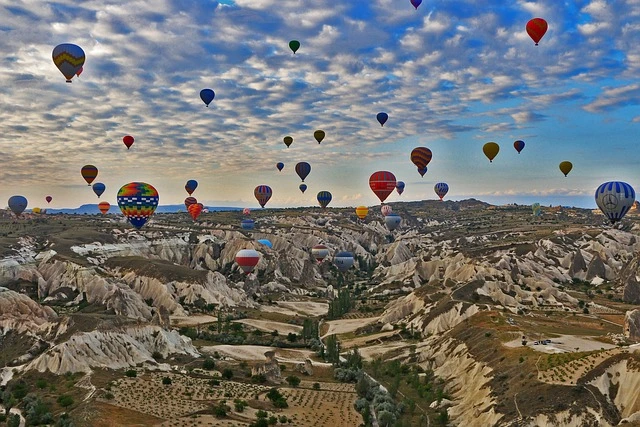
The hiking trail through Pigeon Valley is Cappadocia's gentlest walk — 3.8 kilometers with only 120 meters of elevation change, well-marked with painted arrows, and suitable for children aged six and above. The hike takes roughly 60 to 90 minutes one-way. Walking from Uchisar toward Goreme is the recommended direction: you descend gradually, the morning light illuminates the decorated cliff faces, and Goreme's cafes await at the finish. At the midpoint, a detour leads to a panoramic viewpoint popular for sunrise photography when hot air balloons drift overhead at altitudes of 100 to 300 meters. Free entry, open year-round, no facilities along the trail — carry water.
Read: Full Pigeon Valley Guide →
Underground Cities — Cappadocia Beneath the Surface
Buried beneath Cappadocia's volcanic plateau lies a network of subterranean settlements so extensive that archaeologists still debate their full extent. Over 200 underground cities have been identified, with new chambers and tunnels discovered regularly. These were not temporary hiding places but fully equipped subterranean communities — complete with ventilation shafts, water wells, stables, wine presses, communal kitchens, churches, and stone doors weighing up to 500 kilograms that could be rolled across tunnels to seal off entire levels from invaders. The earliest levels date to Hittite times (circa 1800-1200 BC), with major expansions by early Christians during the Byzantine-Arab wars of the 7th to 10th centuries AD. Two underground cities dominate every Cappadocia itinerary: Derinkuyu and Kaymakli.
Derinkuyu — The Deepest Underground City (60 Meters, 8 Levels)
Derinkuyu is the deepest excavated underground city in Cappadocia, plunging 60 meters (approximately 200 feet) beneath the surface across eight verified levels, with geological surveys suggesting at least three additional levels remain unexcavated. At its peak in the Byzantine era, Derinkuyu is estimated to have sheltered up to 20,000 people alongside their livestock and food stores for periods of months at a time. The city includes a cruciform church on the lowest open level, a missionary school with vaulted ceilings, a 55-meter ventilation shaft that also served as a water well, stables on the uppermost level to minimize animal odors in living quarters, and the signature 500-kilogram rolling stone doors — circular millstone-like disks carved from the volcanic tuff, designed to be rolled across tunnels from the inside and locked in place with a central bar, making them impenetrable from without.
Visiting Derinkuyu is physically demanding. The tunnels connecting levels are narrow — some as tight as 60 centimeters across and 150 centimeters high — requiring visitors to crouch and shuffle sideways. Claustrophobia is a genuine concern; if enclosed spaces trigger anxiety, consider Kaymakli instead, which has wider passages. The descent and ascent involve approximately 200 steps in each direction. Budget 60 to 90 minutes for a thorough visit. Entry costs 13 EUR or is covered by the Museum Pass Cappadocia. Located 35 kilometers south of Goreme (40 minutes by car). Wheelchair inaccessible; not recommended for visitors with mobility limitations, respiratory conditions, or severe claustrophobia.
Kaymakli — The Widest, Most Family-Friendly Underground City
Kaymakli lies 9 kilometers north of Derinkuyu and offers a fundamentally different underground experience. While shallower than its neighbor — four levels open to the public descending roughly 25 meters — Kaymakli's tunnels are wider, its chambers more spacious, and its overall layout more conducive to families, older visitors, and anyone who finds Derinkuyu's narrow passages intimidating. Kaymakli accommodated an estimated 3,500 to 5,000 people during sieges and features a particularly well-preserved stable level with stone tethering rings, a copper-processing workshop suggesting metallurgical activity continued even during periods of underground refuge, and a complex of interconnected storage rooms lined with storage jars still in situ.
Kaymakli's signature feature is its ventilation system, which uses a network of shafts so effective that on the hottest summer day the underground temperature remains a constant 13 to 15 degrees Celsius. The lighting is dim — deliberately so, to preserve the atmosphere — and bringing a small torch is recommended for examining details in darker corners. Budget 45 to 60 minutes. Entry costs 13 EUR or is covered by the Museum Pass Cappadocia. For a detailed comparison of the two cities that explains which one matches your interests, physical comfort, and itinerary, see our dedicated guide.
Explore Kaymakli → Derinkuyu vs Kaymakli: Full Comparison →
Ihlara Valley and Selime Monastery — The Green Canyon
Roughly 85 kilometers southwest of Goreme, the Ihlara Valley is a geological and cultural outlier — a 14-kilometer gorge carved by the Melendiz River through a volcanic plateau, its sheer walls rising 100 to 120 meters above the water and lined with over 100 rock-hewn churches and monastic chambers. Unlike the arid, lunar terrain of northern Cappadocia, Ihlara is lush, green, and riparian — poplar and pistachio trees shade the riverside trail, frogs croak from reed beds, and the air carries the scent of wild mint and thyme rather than volcanic dust. Walking the full 14 kilometers takes 4 to 5 hours, but most visitors tackle the most scenic 4-kilometer central section between the official Ihlara entrance and Belisirma village, which passes the most significant churches — Agacalti (Daniel) Church with its well-preserved 10th-century frescoes, and the Snake Church (Yilanli Kilise) whose paintings depict the damned writhing among multi-headed serpents.
Selime Monastery: At the northern terminus of Ihlara Valley, Selime Monastery is carved into and atop a conical volcanic peak — the largest rock-cut monastery in Cappadocia. Built in the 13th century and associated with the Seljuk period, the complex includes a cathedral-sized church with two rows of columns, a kitchen with a massive chimney carved through the rock, stables, monk cells, and a network of defensive tunnels. The climb to the upper levels involves steep, unguarded steps and narrow ledges without railings — it is not suitable for young children or anyone with a fear of heights. The view from the summit, encompassing the Melendiz River canyon and the surrounding plateau, is one of the most dramatic in southern Cappadocia. Entry to Ihlara Valley costs 15 EUR; Selime Monastery is 10 EUR or included in the Museum Pass Cappadocia. A full visit combining both sites requires 4 to 6 hours including the drive from Goreme.
Avanos — The Potter's Town on the Kizilirmak River
Avanos straddles the Kizilirmak (Red River) — Turkey's longest river — roughly 10 kilometers north of Goreme, and has been a ceramics center since Hittite times, over 4,000 years ago. The town's existence as a pottery capital is no accident: the Kizilirmak carries iron-rich red clay from the Anatolian highlands, depositing it in thick beds along the riverbanks. This clay, combined with the region's abundant tuff-based glazes, has sustained a continuous ceramic tradition that stretches from the Bronze Age to the present day. The Hittites fired their distinctive beak-spouted jugs here; the Phrygians added geometric decoration; the Romans shipped Avanos amphorae across the empire; and the Seljuks elevated the town's tiles to adorn mosques and madrasas from Konya to Sivas.
Today, Avanos is a working town rather than a theme-park version of itself. Family workshops line the cobbled lanes of the old quarter, and you can watch master potters throw clay on traditional kick-wheels — a technique passed father-to-son for generations and now recognized by UNESCO as Intangible Cultural Heritage. Most workshops welcome visitors to try the wheel themselves; a 20-minute hands-on session typically costs 10 to 15 EUR and includes firing and shipping of your finished piece (allow 2-3 weeks for delivery). The town's other draws include the Sarihan Caravanserai (a restored 13th-century Silk Road inn that hosts nightly whirling dervish ceremonies), the hair museum tucked beneath a pottery shop (Chez Galip, holding locks from over 16,000 women and recognized by Guinness World Records), and the Ottoman-era stone bridge spanning the Kizilirmak, illuminated after dark and popular for evening strolls. Avanos rewards a half-day visit; combine it with a northern valley morning for a full and varied day.
Urgup — Wine Country, Cave Mansions, and Ottoman Elegance
Urgup lies 8 kilometers east of Goreme and projects a distinctly different character — less backpacker, more refined; less Instagram backdrops, more Ottoman stone mansions and vineyard-covered hillsides. Cappadocia's wine industry is centered here, built on indigenous Anatolian grape varieties — Emir (crisp, mineral-driven white), Kalecik Karasi (light-bodied, cherry-toned red), and Bogazkere (tannic, age-worthy red with notes of black olive and leather) — grown in volcanic soils at 1,000 to 1,200 meters of elevation. Several wineries around Urgup offer tastings and cellar tours, including Turasan (the region's largest producer, established 1943) and Kocabag (a smaller boutique operation with a terrace overlooking the vineyards). A tasting flight of four wines typically costs 15 to 25 EUR.
Urgup's architectural highlight is the Temenni Hill viewpoint, accessed via a tunnel through the rock that opens onto a domed Seljuk tomb and a panoramic terrace overlooking the town's cascade of cave houses, stone mansions, and the distant Erciyes Mountain. The old town district — particularly the streets radiating from the central mosque — preserves outstanding examples of Cappadocian Greek and Ottoman domestic architecture, with elaborately carved stone facades bearing Armenian and Greek inscriptions dating to the late 19th century. Unlike the purpose-built cave hotels of Goreme, many of Urgup's cave accommodations are genuinely historic — family homes for generations, converted gradually and respectfully into boutique lodging. Urgup rewards a relaxed half-day visit centered on wine tasting, old town wandering, and a sunset ascent of Temenni Hill.
Best Tours Covering All These Places
Cappadocia's attractions are far too spread out to visit comprehensively without wheels, and while self-drive is an option, the guided tour system has evolved precisely to solve the logistical puzzle of the north-south geography. Two standardized routes cover virtually every place listed in this guide, with a third option for travelers who want maximum flexibility and coverage.
Red Tour — Northern Cappadocia Discovery
The Red Tour is the essential northern circuit. A full-day excursion (typically 9:30 AM to 4:30 PM) covering Goreme Open-Air Museum, Uchisar Castle (panoramic stop), Love Valley, Pasabag Monks Valley, Devrent Imagination Valley, and Avanos for a pottery demonstration and lunch. This tour delivers the highest concentration of iconic Cappadocia imagery in a single day — perfect for travelers with limited time. Group tours run 45 to 60 EUR per person (excluding museum entry fees). Private Red Tours with Temren Travel provide a dedicated historian guide and VIP Mercedes Vito, allowing you to set the pace and skip any site that does not interest you — no forced shopping stops, ever.
Green Tour — Southern Cappadocia Explorer
The Green Tour covers the southern circuit: Derinkuyu (or Kaymakli) Underground City, Ihlara Valley (4-kilometer riverside hike to Belisirma village with lunch), Selime Monastery, and a panoramic stop at Pigeon Valley on the return drive. A full day from roughly 9:00 AM to 5:30 PM, with longer driving distances (approximately 2.5 hours total in the vehicle across the day). Group tours run 50 to 65 EUR per person. Private Green Tours with Temren Travel allow you to choose between Derinkuyu (deepest, tighter tunnels) and Kaymakli (wider, family-friendly) based on your preference, and adjust the Ihlara hike length to match your fitness level.
Best of Both — Premium Private Tour
For travelers who want comprehensive coverage without being locked into standardized itineraries, Temren Travel's Best of Cappadocia private tour combines the highlights of both routes across two days with complete flexibility. Day one covers the northern valleys and towns at your pace; day two takes you south to the underground cities and Ihlara. Between the two days, you see virtually every place listed in this guide — without repeating a stop. Your dedicated historian guide, VIP Mercedes Vito, door-to-door hotel transfers, and zero forced shopping are included. This is the option for travelers who want depth, not breadth; understanding, not just photographs; and an experience shaped entirely around their interests rather than a tour operator's convenience.
Expert Tips for Visiting Cappadocia's Places
Drawing on years of guiding visitors across every site in this guide, our local team has compiled the following field-tested advice — practical insights that will save you time, money, and frustration.
- Buy the Museum Pass Cappadocia on day one. At 130 EUR for 3 days, the pass covers Goreme Open-Air Museum (including the Dark Church), Zelve, Derinkuyu, Kaymakli, Ihlara Valley, Selime Monastery, and several smaller sites. If you visit even four of these, the pass pays for itself. Purchase it at the Goreme Open-Air Museum ticket office — not online, where third-party resellers add markups. You can also buy it at Derinkuyu and Kaymakli ticket windows. The pass is activated on first use, not on purchase date, so buy it the moment you arrive.
- Start every day by 8:30 AM. Cappadocia's attractions are quietest between 8:30 and 10:00 AM. By 10:30, tour buses from Istanbul overnight services and regional operators have arrived, and sites like Pasabag and Goreme Open-Air Museum become genuinely crowded. The early start also means you finish your tour day by mid-afternoon, leaving time for a sunset valley walk, a hammam, or a leisurely dinner.
- Skip one underground city — you do not need both. Derinkuyu and Kaymakli are historically and architecturally distinct, but for the average visitor on a tight schedule, visiting both eats up 3+ hours including driving time for diminishing returns. Pick one based on your comfort: Derinkuyu for depth and drama (and tighter spaces), Kaymakli for wider tunnels and a less physically demanding experience. Our comparison guide linked above breaks this decision down in detail.
- Carry cash in Turkish Lira for entry fees. While major museums accept credit cards, smaller sites (including Zelve's parking, some Ihlara Valley sections, and rural churches) are cash-only. Carry at least 1,000 TL in small denominations. ATMs are available in Goreme, Urgup, and Avanos but charge variable foreign transaction fees.
- Book your tours before you arrive — especially in April, May, September, and October. The best private guides and vehicles book out 7 to 14 days in advance during peak season. Same-day or next-day availability is unreliable and often means settling for whichever guide is left. Booking ahead ensures your preferred itinerary and a guide whose expertise matches your interests — whether that means Byzantine art history, geological processes, or the best angles for your Instagram feed.
Frequently Asked Questions
How many days do I need to see all the main places in Cappadocia?
Two full days covers the essential highlights: one day for the northern circuit (Red Tour: Goreme Open-Air Museum, Uchisar Castle, fairy chimney valleys, Avanos) and one day for the southern circuit (Green Tour: underground city, Ihlara Valley, Selime Monastery). Three days allows a more relaxed pace with a third day for wine tasting in Urgup, a pottery workshop in Avanos, hiking an extra valley, or visiting less-crowded sites like Zelve or Soganli Valley. Four days opens up balloon-dependent activities (flights are cancelled roughly 30% of mornings due to wind), a Turkish bath experience, and the option to revisit a favorite spot. Anything less than two days means making hard choices — and if you have only one day, commit entirely to the northern circuit.
What is the single most unmissable place in Cappadocia?
If you can visit only one site, make it the Goreme Open-Air Museum — specifically the Dark Church frescoes inside. The combination of historical significance (continuous monastic occupation spanning nine centuries), artistic achievement (the finest surviving examples of 10th- and 11th-century Byzantine painting in Anatolia), and sheer atmospheric power (frescoes emerging from darkness inside a cave church unchanged for a millennium) is unmatched anywhere else in the region. Budget 90 minutes, bring the 6 EUR Dark Church supplement in cash, and go as early in the morning as possible.
Are Cappadocia's underground cities suitable for children?
It depends on the child and the city. Kaymakli is generally suitable for children aged five and above — its tunnels are wider (typically 80 to 120 centimeters), better lit, and less psychologically intense than Derinkuyu. Derinkuyu is recommended for children aged eight and above who are comfortable in enclosed spaces; the narrowest tunnels are genuinely tight even for adults, and the depth (60 meters, equivalent to an 18-story building) can feel intimidating. Neither city is suitable for toddlers or infants in carriers — the crouching required in low tunnels makes child-carrying awkward and potentially unsafe. For families with young children who still want the underground experience, Kaymakli is the clear choice.
Do I need a guide, or can I explore Cappadocia independently?
You can explore independently — all major sites are open to the public with English-language signage, and hiking trails like Pigeon Valley and Love Valley are well-marked and free. However, the experience differs substantially. A good guide at the Goreme Open-Air Museum transforms 30 anonymous cave churches into a chronological narrative of Byzantine monasticism, pointing out details — the red ochre outlining still visible beneath later frescoes, the carved niches that held oil lamps, the graffiti left by 19th-century European travelers — that you would otherwise walk past. At the underground cities, a guide explains the engineering behind the ventilation shafts and rolling stone doors, context that turns a claustrophobic tunnel maze into a coherent underground civilization. If you are visiting for two days, consider a guided tour for the northern circuit (where the historical density is highest) and independent exploration for one of the southern sites.
What is the best time of year to visit Cappadocia?
April through June and September through October deliver the best balance of pleasant weather, manageable crowds, and reliable balloon flight conditions. Daytime temperatures range from 18 to 28 degrees Celsius — warm enough for comfortable hiking without the oppressive 35-degree-plus heat of July and August. Spring brings wildflowers to the valley floors and snowmelt to the rivers; autumn paints the vineyards gold and russet. July and August are hot and crowded but offer the most reliable balloon weather. December through February are cold (often below freezing at night, occasional snow) but dramatically beautiful — snow-dusted fairy chimneys under blue winter skies create images unlike anything in the summer brochures — and you will have sites almost entirely to yourself. The only genuinely challenging month is March, when rain and mud can make hiking trails unpleasant and balloon cancellations are frequent.
Can I visit all the fairy chimney valleys in one day?
Yes, and many Red Tour itineraries do exactly that. The five major northern valleys — Love, Pasabag, Devrent, Zelve, and Pigeon — can be covered in a single well-organized day because they are clustered within a 15-kilometer radius. A typical Red Tour visits all five, allocating 20 to 45 minutes at each. However, this pace means you see each valley from its main viewpoint or parking area rather than hiking through it. If you want to hike Love Valley (1.5 to 2.5 hours) or Pigeon Valley (1 to 1.5 hours), you will need to pick one for the hike and visit the others more briefly. A private tour gives you the flexibility to prioritize — spend two hours hiking Love Valley at sunrise, then visit Pasabag and Devrent as shorter stops, skipping Zelve if the day runs long.
Are there any hidden gems in Cappadocia that most tourists miss?
Absolutely. Soganli Valley, 50 kilometers southeast of Goreme, features a quieter, greener version of the Ihlara experience with rock churches containing well-preserved 10th-century frescoes and almost no other visitors — you will likely share the valley with local shepherds and their flocks rather than tour groups. Mustafapasa (formerly Sinasos), 6 kilometers south of Urgup, was a prosperous Greek Orthodox town before 1923, and its streets are lined with abandoned mansions featuring elaborate stone facades, carved lintels bearing Greek inscriptions, and hauntingly beautiful decay. The Gomeda Valley, between Mustafapasa and Urgup, contains a hidden complex of cave churches, dovecotes, and a rock-cut mosque along a 3-kilometer trail that sees perhaps 20 visitors on a busy day. These sites require independent transport — rental car or private driver — as they fall outside standard tour routes.
Plan Your Cappadocia Exploration with Temren Travel
Cappadocia is not a checklist — it is a landscape that rewards the unhurried traveler who arrives with curiosity and an open schedule. Whether you want to hike the full 4.9 kilometers of Love Valley at sunrise with a guide who can explain the geological forces that shaped every chimney, stand alone among the 11th-century frescoes of the Dark Church before the tour buses arrive, descend 60 meters into the Hittite-era tunnels of Derinkuyu with an archaeologist-trained guide who sees the city as it was lived rather than as it is photographed, or simply sit on a panoramic terrace in Urgup with a glass of Bogazkere and watch the sunset paint Erciyes Mountain pink — the difference between a rushed photo stop and a memory that lasts decades is the quality of your guide and the flexibility of your itinerary.
Temren Travel is a locally owned and operated Cappadocia agency. Our guides grew up in Goreme and Uchisar, trained in history and archaeology at Turkish universities, and possess the kind of deep, lived knowledge that no scripted tour can replicate. Every private tour includes hotel pickup, a dedicated driver, a licensed English-speaking guide, and a VIP Mercedes Vito — no shared buses, no forced shopping detours, no group compromises. Whether you book the Red Tour for the northern valleys, the Green Tour for the underground cities and Ihlara, or the Best of Both for the comprehensive Cappadocia experience, your day is built around your interests, your pace, and your curiosity.
Book the Red Tour — Northern Cappadocia → Book the Green Tour — Southern Cappadocia → Book: Best of Cappadocia →
Related Guides
- 3 Days in Cappadocia: The Ultimate 72-Hour Itinerary (2026)
- Cappadocia Hot Air Balloons: Complete Guide to Flights, Prices & Safety (2026)
- North vs South Cappadocia Tours: Which Route Is Right for You? (2026)
- Derinkuyu vs Kaymakli: Which Underground City Should You Visit? (2026)
- Cappadocia with Kids: Family-Friendly Guide to Fairy Chimneys & Fun (2026)
- What to Wear in Cappadocia: Seasonal Packing Guide (2026)
- Cappadocia on a Budget: Affordable Tips & Hidden Savings (2026)
- Is Cappadocia Safe? Complete Safety Guide for Travelers (2026)
- Private vs Group Cappadocia Tours: Which Is Right for You? (2026)
- Red Tour vs Green Tour Cappadocia: Which Route Should You Choose? (2026)
- Best Time to Visit Cappadocia: Month-by-Month Guide (2026)
- Cappadocia for Muslim Travelers: Halal Food, Mosques & Prayer Times Guide
Recent Travel Guides
Quick Answers — Places to Visit in Cappadocia 2026 — Valleys, Underground Cities & Viewpoints | Temren Travel
FAQ 1 Love Valley — Tallest Chimneys and Sunset Magic
Love Valley (Ask Vadisi) contains the tallest and most distinctively shaped fairy chimneys in Cappadocia — phallic pillars rising 25 to 40 meters from the valley floor, their basalt caps silhouetted against the western sky. The 4.9-kilometer trail between Goreme and Uchisar is the region's most accessible moderate hike, requiring no technical skill and delivering the most dramatic sunset photography in Cappadocia. The valley floor, once cultivated as vineyards by Goreme's Greek Orthodox community before the 1923 population exchange, is now a patchwork of walking paths and wild almond groves. ATV and Jeep safaris use dedicated off-road tracks through the valley, making this the only major fairy chimney valley accessible by motorized tour as well as on foot. Free entry, open 24 hours, best visited 60 to 90 minutes before sunset.
FAQ 2 Pasabag Monks Valley — Multi-Headed Mushroom Chimneys
Pasabag (also called Monks Valley, or officially Pasha's Vineyard) is the single most photographed fairy chimney site in Cappadocia — and for good reason. The valley contains a dense cluster of mushroom-shaped formations, several of which feature two or even three basalt caps stacked on a single tuff column, a geological rarity caused by multiple phases of volcanic deposition and differential erosion. The most famous chimney houses a small hermit cell dedicated to St. Simeon Stylites, the 5th-century ascetic who spent 37 years living atop a pillar in Syria — followers carved this isolated chapel high inside the chimney in homage to his extreme solitude. Pasabag is a compact, paved site requiring no hiking; a complete visit takes 30 to 45 minutes. Entry is free, though parking costs 20 TL in peak season. Located 5.5 kilometers northeast of Goreme on the road to Zelve. Tour buses arrive heavily from 10:00 AM to 3:00 PM — visit early (before 9:00 AM) or late (after 4:00 PM) for the best experience.
FAQ 3 Devrent Imagination Valley — Nature's Rock Zoo
Devrent Valley differs from every other Cappadocia valley in one crucial respect: it has no rock churches, no hermit cells, no Byzantine frescoes, and no human-carved structures of any significance. What Devrent has instead is a collection of wind-sculpted rock formations whose silhouettes — with a modest assist from human imagination — resemble animals, objects, and figures. The most famous is the "camel rock," a formation that genuinely looks like a kneeling dromedary, right down to the neck, hump, and muzzle. Others suggest a dolphin, a seal, a snail, a pair of kissing birds, and — most famously — a pillar that from one angle resembles the Virgin Mary holding the infant Christ. This last formation has lent Devrent its alternative name: Imagination Valley.
FAQ 4 Zelve Open-Air Museum — Quieter, Richer, More Immersive
If Goreme Open-Air Museum feels crowded and curated, Zelve is its wilder, more atmospheric sibling. Located 10 kilometers northeast of Goreme at the terminus of a narrow valley road, Zelve was a functioning village until 1952, when erosion rendered the cave dwellings too unstable for habitation and the Turkish government relocated residents to nearby Aktepe (now Yeni Zelve). What remains is a sprawling complex of three interconnected valleys containing churches, a mosque (one of the few rock-cut mosques in Cappadocia), dovecotes, a mill, and hundreds of domestic cave rooms spread across a 1.5-kilometer walking circuit.
FAQ 5 Pigeon Valley — Dovecotes, Hiking, and Balloon Backdrops
Pigeon Valley (Guvercinlik Vadisi) stretches 3.8 kilometers between Goreme and Uchisar, its name deriving from the thousands of dovecotes — small rectangular niches with entrance holes — carved into the sheer tuff cliffs that line the gorge. For centuries, Cappadocian farmers cultivated pigeons for their guano, a nitrogen-rich fertilizer essential for the region's vineyards and orchards. Each dovecote was meticulously carved, often decorated with painted geometric patterns or niches designed to attract nesting birds, and the accumulated droppings were collected twice yearly using ropes and pulleys lowered from the cliff tops.
FAQ 6 Derinkuyu — The Deepest Underground City (60 Meters, 8 Levels)
Derinkuyu is the deepest excavated underground city in Cappadocia, plunging 60 meters (approximately 200 feet) beneath the surface across eight verified levels, with geological surveys suggesting at least three additional levels remain unexcavated. At its peak in the Byzantine era, Derinkuyu is estimated to have sheltered up to 20,000 people alongside their livestock and food stores for periods of months at a time. The city includes a cruciform church on the lowest open level, a missionary school with vaulted ceilings, a 55-meter ventilation shaft that also served as a water well, stables on the uppermost level to minimize animal odors in living quarters, and the signature 500-kilogram rolling stone doors — circular millstone-like disks carved from the volcanic tuff, designed to be rolled across tunnels from the inside and locked in place with a central bar, making them impenetrable from without.