Travel Guide
03
Jul
Pasabag Monks Valley: Complete Guide to Cappadocia's Iconic Fairy Chimneys (2026)
Bottom Line Up Front: Pasabag Monks Valley is home to the most spectacular multi-headed fairy chimneys in all of Cappadocia — massive stone mushrooms capped with dark basalt that have stood for millions of years. This UNESCO World Heritage site also holds the 5th-century hermit cell of St. Simeon, carved directly into a triple-capped chimney. Located just 5 kilometers from Goreme on the Avanos road, Pasabag is an unmissable stop on any Cappadocia itinerary and a highlight of the private Red Tour.
Why Visit Pasabag? The Crown Jewel of Cappadocia's Valleys
Ask any local guide which single valley best represents Cappadocia's otherworldly landscape, and the answer comes without hesitation: Pasabag. While Goreme's Open-Air Museum holds the frescoes and Devrent fires the imagination, Pasabag delivers the definitive fairy chimney experience — colossal multi-headed formations that appear in every Cappadocia tourism poster, every Instagram gallery, and every travel documentary ever filmed in the region.
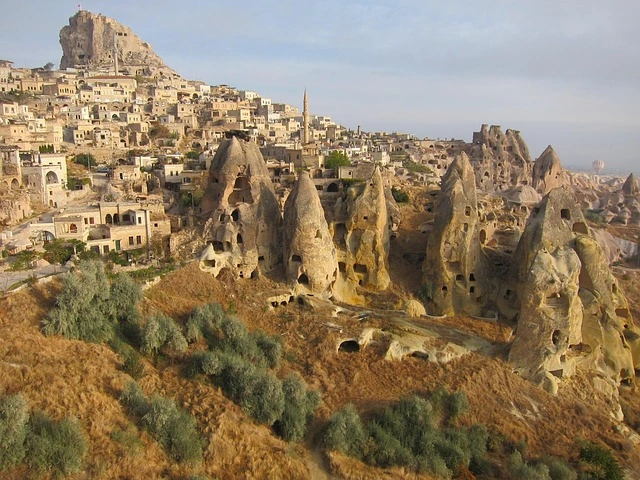
What sets Pasabag apart is the sheer density and scale of its formations. The valley floor is a concentrated gallery of mushroom-shaped pinnacles, many standing over 20 meters tall. Unlike Love Valley's slender spires or Devrent's abstract shapes, Pasabag's chimneys are multi-stemmed — a single broad base supporting two, three, or even four separate caps. This is geology at its most theatrical, and it is all contained within a compact, easily walkable site that rewards both a 20-minute photo stop and an hour-long exploration.
Beyond the visual spectacle, Pasabag carries deep historical significance. The valley earned its name — "the Pasha's Vineyard" in Turkish — from the vineyards once cultivated in its fertile volcanic soil. Its alternative name, Monks Valley (Rahipler Vadisi), comes from the hermit monks who carved their solitary cells into the chimney tops during the early Christian period. The most famous of these hermits, St. Simeon, lived atop a triple-capped chimney in the 5th century, and his chapel remains visible today — a powerful physical link to Cappadocia's monastic past.
As local Cappadocia experts, we consider Pasabag the single most photogenic and historically layered valley in the region. On a private Red Tour, it typically serves as the anchor stop between Goreme and Avanos — the moment when visitors truly understand why Cappadocia was inscribed as a UNESCO World Heritage Site in 1985.
Book Private Red Tour — Includes Pasabag →
The Geology of Pasabag: 60 Million Years in the Making
The fairy chimneys of Pasabag are not random erosional oddities — they are the product of a precise geological sequence spanning 60 million years. Understanding this history transforms a simple photo stop into a journey through deep time.
The story begins with three major volcanic eruptions. Mount Erciyes (3,917 meters), Mount Hasan (3,268 meters), and Mount Gullu — all now extinct — blanketed the region in layer after layer of volcanic material. The lower layers consisted of soft volcanic ash and tuff, which compressed into a relatively weak, easily eroded rock. The upper layers were formed from harder basalt and andesite lava flows, which cooled into dense, resistant caps. Over millions of years, wind and water carved through the soft tuff beneath these protective basalt hats, leaving behind the mushroom-like pillars we see today.
Pasabag's unique multi-headed chimneys formed when a single broad basalt cap fragmented into multiple pieces. As erosion continued, each fragment protected the tuff column directly beneath it, while the exposed areas between them wore away faster. The result: a single chimney base supporting three or four separate stems, each with its own dark capstone. This phenomenon reaches its most dramatic expression in the valley's center, where the iconic triple-capped chimney — the one that housed St. Simeon — dominates the landscape.
The Colors of Pasabag's Rock
Look closely at any Pasabag chimney and you will read a color-coded geological timeline. The pale, cream-colored tuff at the base represents the oldest deposits — fine ash from the earliest eruptions. Darker bands of pink and ochre indicate layers rich in iron and other minerals from later volcanic events. The jet-black basalt caps are the youngest formations, cooled lava flows that once formed a continuous plateau before erosion isolated them into individual chimneys. This stratification is not just beautiful — it is a 60-million-year archive preserved in stone.
St. Simeon's Chapel: The Monk Connection
The triple-capped fairy chimney at the heart of Pasabag is not just a geological wonder — it is a sacred site with a remarkable human story. In the 5th century AD, a hermit monk named Simeon (not to be confused with St. Simeon Stylites of Syria, though they shared the same ascetic tradition) chose this chimney as his spiritual retreat. He carved a small chapel with an altar, a living cell, and a narrow entrance passage into the soft tuff, living in near-total isolation.
Why here? Early Christian hermits sought solitude in Cappadocia's valleys for the same reason the underground cities were built — safety and seclusion. The Roman Empire had only recently legalized Christianity, and monastic traditions were still forming. By climbing into a chimney top and carving out a cell, Simeon removed himself from the world while remaining close enough to the Christian communities of Goreme and Avanos to receive occasional supplies. His choice of a triple-capped chimney may have held symbolic meaning — the three caps evoking the Holy Trinity.
The chapel is modest by the standards of Goreme's rock churches — there are no frescoes, no grand narthex, no carved columns. But the simplicity is precisely what makes it powerful. Standing inside Simeon's cell, looking out through the narrow window he carved 1,600 years ago, you feel the weight of that solitude. A small wooden ladder inside the chimney allows visitors to climb to the upper levels and the chapel space itself. The steps are steep and the passage tight, but the view from the top — across the valley floor scattered with chimneys — is unforgettable.
Location and How to Get to Pasabag
Pasabag sits on the D302 highway connecting Goreme to Avanos, approximately 5 kilometers (3.1 miles) northeast of Goreme town center and 7 kilometers (4.3 miles) southeast of Avanos. The valley entrance is clearly signposted and impossible to miss — the towering chimneys are visible from the road well before you arrive.
By Private Tour (Recommended): The most comfortable and time-efficient way to visit. A private Red Tour with Temren Travel includes direct door-to-hotel transport in a VIP Mercedes Vito, a dedicated historian guide who brings the geology and monastic history to life, and the flexibility to spend as much or as little time at Pasabag as you wish — typically 45 to 90 minutes. No waiting for bus groups, no rigid schedule. Explore the Private Red Tour →
By Rental Car: From Goreme, drive northeast on the Avanos road (D302) for approximately 8 minutes. A small parking area is available at the entrance. Car rental costs approximately 35-50 EUR per day in 2026.
By Taxi: A one-way taxi from Goreme to Pasabag costs approximately 150-200 TRY (5-7 EUR) in 2026. Arrange a return pickup time with your driver, as taxis do not wait at the site. Alternatively, ask your hotel to arrange a round-trip transfer.
By Public Transport: Dolmus (shared minibus) services run between Goreme and Avanos approximately every 30 minutes during daylight hours. Ask the driver to drop you at Pasabag — the fare is approximately 20-25 TRY (under 1 EUR). Be aware that catching a return dolmus requires waiting on the roadside; there is no designated stop.
On Foot or by Bicycle: The 5-kilometer walk or cycle from Goreme is scenic but uphill on the return. Allow approximately 1 hour on foot or 20-25 minutes by bicycle. Mountain bikes are available for rent in Goreme for approximately 150-200 TRY per day.
Explore Goreme — Your Cappadocia Base →
Best Time to Visit Pasabag
The optimal visiting window for Pasabag is narrow but easy to plan around. The valley opens daily at 8:00 AM, and the first hour — 8:00 to 9:00 AM — offers the most rewarding experience. Morning light angles across the chimneys from the east, illuminating the pale tuff in warm golden tones that fade to flat midday light by 11:00 AM. Equally important, the large tour buses from Istanbul and Antalya begin arriving between 9:30 and 10:00 AM. Arrive early, and you will share the valley with perhaps a dozen other visitors. Arrive at 11:00 AM, and you will share it with several hundred.
Seasonal Considerations
Spring (April-May): The absolute best season. Wildflowers carpet the valley floor in purple and yellow, daytime temperatures hover at a comfortable 18-24 degrees C (64-75 degrees F), and the morning light is soft and diffused. This is peak photography season — book your private tour early to secure your preferred date.
Summer (June-August): Hot, with midday temperatures reaching 35 degrees C (95 degrees F). The valley offers virtually no shade. Visit at opening time (8:00 AM) and bring at least 1 liter of water per person. Sunscreen and a hat are essential — the pale tuff reflects sunlight intensely.
Autumn (September-October): Nearly as good as spring. Temperatures cool to 15-22 degrees C (59-72 degrees F), the summer crowds thin, and the low autumn sun casts long, dramatic shadows perfect for photography. The vineyards surrounding the valley turn gold and amber.
Winter (November-March): The chimneys dusted with snow create a surreal, monochromatic landscape that few tourists see. Temperatures range from -5 to 8 degrees C (23-46 degrees F). The site remains open and uncrowded, but paths can be icy — wear boots with good grip. Some days, the Cappadocia snowscape is worth braving the cold for.
Read our full month-by-month guide to Cappadocia →
Pasabag on the Private Red Tour
Pasabag is an essential stop on the classic Northern Cappadocia (Red Tour) itinerary, and for good reason — it represents the purest expression of the region's geological identity. On Temren Travel's private Red Tour, your visit to Pasabag unfolds without the pressure of a bus schedule. Your dedicated historian guide walks you through the valley at your pace, explaining the volcanic processes that shaped each chimney, recounting St. Simeon's story as you stand at the base of his chapel, and helping you find the most photogenic angles away from the crowds.
A typical private tour visits Pasabag mid-morning, after the Goreme Open-Air Museum and before continuing to Devrent (Imagination Valley) and Avanos for a traditional pottery workshop and lunch. Because you are not sharing your guide with 30 other tourists, you can ask every question that occurs to you — about the geology, the frescoes, the monastic traditions, or simply where to find the best local pottery to take home. The itinerary is yours to shape. Want to spend 90 minutes photographing every angle of every chimney? Your guide will be there, pointing out details you would otherwise miss. Prefer a 30-minute overview and extra time at the pottery workshop in Avanos? Done.
Book Your Private Red Tour — 30% Deposit, Balance on Arrival →
Explore the Best of Cappadocia Tour — Covers Pasabag + South →
Photography Tips for Pasabag
Pasabag is one of the most photographed locations in Turkey, and with good reason. Getting a memorable shot requires more than pointing your phone — a little planning elevates your images from tourist snapshots to frame-worthy compositions.
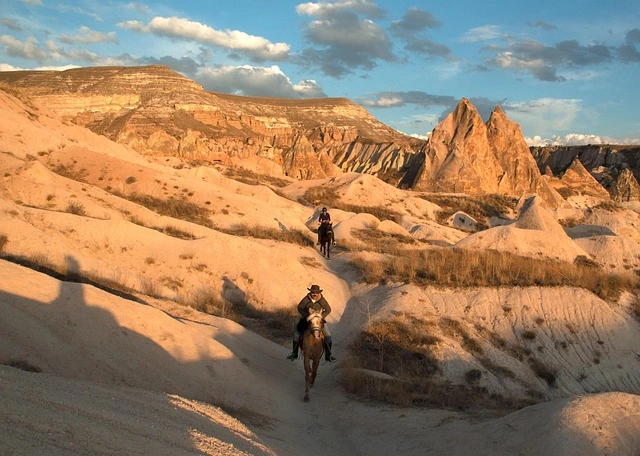
Morning Light (8:00-9:30 AM): The golden window. Low-angle sunlight from the east wraps around each chimney, emphasizing texture and creating long, dramatic shadows across the valley floor. The pale tuff glows warm amber — this is the light that fills Cappadocia postcards. After 11:00 AM, the sun sits overhead and the chimneys lose their dimensionality.
Best Angles: For the iconic triple-capped chimney, position yourself on the slightly raised ground to the northwest — this angle separates the three caps cleanly against the sky and avoids the parking area in the background. For a sense of scale, include a person in the frame standing at the base of a chimney; the formations are so large that without a human reference, photographs fail to convey their true size. The path leading from the entrance toward St. Simeon's chimney creates a natural leading line for dramatic wide-angle shots.
Drone Restrictions: Drone use in Pasabag and across all Cappadocia valley sites is regulated. As a UNESCO World Heritage protected zone, recreational drone flights are generally prohibited without prior authorization from the Turkish Directorate General of Civil Aviation and the local municipality. Even with authorization, flights directly over visitors are forbidden. If drone footage is essential to your project, consult your tour operator well in advance — the permitting process can take weeks.
Gear Recommendations: A wide-angle lens (16-35mm) captures the chimneys' full height and the valley's breadth. A telephoto lens (70-200mm) isolates individual formations and compresses the landscape for layered compositions. A polarizing filter deepens the blue sky against the pale tuff, especially useful in the harsh midday light if an early visit is not possible.
Pasabag vs Other Fairy Chimney Valleys
Cappadocia offers several fairy chimney valleys, each with a distinct character. Understanding the differences helps you prioritize your limited vacation time.
| Feature | Pasabag (Monks Valley) | Goreme Valley | Devrent (Imagination Valley) |
|---|---|---|---|
| Chimney Type | Multi-headed, mushroom-shaped, basalt-capped | Conical, single-stem, densely clustered | Abstract, animal-shaped, uncapped pinnacles |
| Best Known For | Triple-capped chimneys, St. Simeon's chapel | Rock-cut churches, frescoes, panoramic views | Camel Rock, imaginative shapes, family fun |
| Historical Significance | 5th-century monastic hermitage | 10th-12th century Byzantine monastic complex | Minimal — primarily geological interest |
| Crowd Level (Peak) | High after 10 AM | Very high — busiest valley in Cappadocia | Moderate — fewer tour buses stop here |
| Time Needed | 45-90 minutes | 60-120 minutes (with museum) | 20-30 minutes |
| Entrance Fee (2026) | ~5 EUR (included in Museum Pass) | ~20 EUR (Goreme Open-Air Museum) | Free |
| Best For | Photography, geology enthusiasts, history buffs | Fresco art, history, panoramic views | Families with kids, quick photo stops |
| UNESCO Status | Yes (Goreme National Park) | Yes (Goreme National Park) | Yes (Goreme National Park) |
Verdict: If you can visit only one fairy chimney valley, make it Pasabag. The combination of visually spectacular multi-headed chimneys, accessible monastic history, and manageable crowds (especially early morning) makes it the highest-value stop in Northern Cappadocia. Goreme's rock churches are essential for fresco enthusiasts, and Devrent's whimsical shapes delight children, but Pasabag delivers the definitive Cappadocian landscape that travelers picture before they arrive.
What to Wear and Entrance Information
Pasabag is an outdoor, unpaved site with uneven volcanic terrain. Comfortable walking shoes with good grip are essential — the tuff paths are dusty in summer and can be slippery after rain. Sandals and flip-flops are not recommended; you will be climbing small inclines and navigating loose gravel. If you plan to climb the narrow ladder inside St. Simeon's chapel, wear flat shoes and clothing that allows freedom of movement — the passage is genuinely tight.
From April through October, lightweight, breathable clothing with sun protection (hat, sunscreen, sunglasses) is recommended. The valley offers almost no natural shade. A light jacket or sweater is useful even in summer months for early morning visits, when temperatures can be cool before the sun clears the ridge. From November through March, dress in warm layers with a windproof outer layer — Cappadocia's winter wind can be biting, especially in open valley floors.
Entrance Information (2026): Pasabag has a small ticket booth at the entrance. The entrance fee is approximately 5 EUR (or equivalent in Turkish Lira). The Cappadocia Museum Pass — which covers Goreme Open-Air Museum, Zelve Open-Air Museum, Kaymakli Underground City, and several other sites — includes Pasabag and represents excellent value if you are visiting three or more paid sites. There are basic toilet facilities near the entrance, and a small cafe selling drinks and snacks operates during peak season (April-October). Note that the cafe may be closed during winter months and off-peak hours.
Expert Tips for Visiting Pasabag
- Arrive at opening time (8:00 AM). This single decision transforms your experience. Between 8:00 and 9:30 AM, you will share the valley with a handful of other early risers. By 10:30 AM, the large tour buses arrive and the site fills rapidly. The morning light is also far superior for photography.
- Climb St. Simeon's chapel first. The ladder inside the triple-capped chimney is narrow and can only accommodate one person at a time in each direction. Doing this first — before any crowds build — means no waiting and a more contemplative experience at the top. The chapel cell and the view from the upper window are worth the climb.
- Combine Pasabag with Avanos for a half-day Northern loop. Pasabag sits directly on the road between Goreme and Avanos. After exploring the valley, continue 7 kilometers to Avanos for a traditional pottery workshop and a leisurely lunch by the Kizilirmak River. This is the most time-efficient way to structure a self-guided morning. Learn more about Avanos →
- Bring water and snacks. The on-site cafe has limited hours and selection. During summer months especially, you will want at least 1 liter of water per person. There are no water fountains or refill stations inside the valley.
- Hire a private guide to unlock the hidden stories. Pasabag's signage is minimal. Without a guide, you see interesting rocks. With a knowledgeable local guide, you learn that the triple-capped chimney housed a hermit for decades, that the dark basalt caps are cooled lava from Mount Erciyes, and that the valley floor was once a productive vineyard cultivated by Ottoman pashas. The difference between looking and understanding is the difference between a photo stop and a memory. Book a private Red Tour with a historian guide →
Frequently Asked Questions
Is Pasabag the same as Monks Valley?
Yes. Pasabag and Monks Valley (Rahipler Vadisi in Turkish) refer to the same location. "Pasabag" means "the Pasha's Vineyard," referencing the vineyards once cultivated here. "Monks Valley" refers to the hermit monks, including St. Simeon, who carved their cells into the fairy chimneys during the early Christian period. Both names are used interchangeably on maps, signs, and tour itineraries.
How long do you need at Pasabag?
Allow 45 minutes for a thorough visit covering the main chimneys, St. Simeon's chapel, and photography. History enthusiasts and photographers should allocate 60-90 minutes. A rushed visit of 20-30 minutes captures the visual highlights but misses the chapel interior and the deeper geological context that makes Pasabag meaningful rather than merely photogenic.
Is Pasabag suitable for children and elderly visitors?
Yes, with caveats. The main valley paths are flat and suitable for most mobility levels, though the volcanic terrain is uneven and unpaved. The climb into St. Simeon's chapel involves a steep, narrow ladder and tight passages — unsuitable for very young children, those with claustrophobia, or anyone with significant mobility limitations. The valley floor itself, however, is accessible and rewarding even without entering the chapel. See why private tours are ideal for families →
Do I need to pay to enter Pasabag?
Yes. As of 2026, the entrance fee is approximately 5 EUR (or equivalent in Turkish Lira). The fee is included if you hold a valid Cappadocia Museum Pass. Entrance is included in all Temren Travel private Red Tour packages, so you will not need to queue at the ticket booth — your guide handles the entry formalities while you begin exploring.
Can I visit Pasabag without a tour?
Absolutely. Pasabag is a standalone site with public access. You can drive, take a taxi, or use the Goreme-Avanos dolmus. However, visiting without a guide means you miss the rich geological and historical context that transforms Pasabag from a collection of interesting rocks into one of the world's most remarkable landscapes. A private guide costs approximately 80-120 EUR for a half-day and covers multiple Northern Cappadocia sites including Pasabag.
Plan Your Pasabag Visit with Temren Travel
Pasabag Monks Valley is more than a photo opportunity — it is the geological and spiritual heart of the Cappadocian landscape. The multi-headed chimneys tell a 60-million-year story of volcanic fury and patient erosion. St. Simeon's chapel, carved into a fairy chimney 1,600 years ago, connects you directly to the monks who sought solitude in this surreal valley. As local Cappadocia experts, we have guided thousands of travelers through Pasabag, and we know how to bring its stories to life — the geology, the monastic history, the hidden photography angles, and the quiet corners that bus groups never reach.
Book Your Private Red Tour — Pasabag Included →
Explore the Best of Cappadocia Tour →
Related Guides
- Goreme Complete Travel Guide — The heart of Cappadocia, just 5km from Pasabag. Where to stay, eat, and explore.
- Avanos: Cappadocia's Pottery Capital — The next stop on the Northern route, famous for its 4,000-year-old pottery tradition on the Kizilirmak River.
- Best Time to Visit Cappadocia: Month-by-Month Guide (2026) — Plan your entire trip around the optimal seasons for each valley and activity.
- Private vs Group Tours in Cappadocia (2026) — Why a private guide transforms your Pasabag experience from a photo stop into a journey through deep time.
- Private Red Tour: Northern Cappadocia — The definitive Northern Cappadocia experience, covering Pasabag, Goreme Open-Air Museum, Devrent Valley, and Avanos.
Recent Travel Guides
Quick Answers — Pasabag Monks Valley: Complete Guide to Cappadocia's Iconic Fairy Chimneys (2026)
FAQ 1 The Colors of Pasabag's Rock
Look closely at any Pasabag chimney and you will read a color-coded geological timeline. The pale, cream-colored tuff at the base represents the oldest deposits — fine ash from the earliest eruptions. Darker bands of pink and ochre indicate layers rich in iron and other minerals from later volcanic events. The jet-black basalt caps are the youngest formations, cooled lava flows that once formed a continuous plateau before erosion isolated them into individual chimneys. This stratification is not just beautiful — it is a 60-million-year archive preserved in stone.
FAQ 2 Seasonal Considerations
<strong>Spring (April-May):</strong> The absolute best season. Wildflowers carpet the valley floor in purple and yellow, daytime temperatures hover at a comfortable 18-24 degrees C (64-75 degrees F), and the morning light is soft and diffused. This is peak photography season — book your private tour early to secure your preferred date.
FAQ 3 Is Pasabag the same as Monks Valley?
Yes. Pasabag and Monks Valley (Rahipler Vadisi in Turkish) refer to the same location. "Pasabag" means "the Pasha's Vineyard," referencing the vineyards once cultivated here. "Monks Valley" refers to the hermit monks, including St. Simeon, who carved their cells into the fairy chimneys during the early Christian period. Both names are used interchangeably on maps, signs, and tour itineraries.
FAQ 4 How long do you need at Pasabag?
Allow 45 minutes for a thorough visit covering the main chimneys, St. Simeon's chapel, and photography. History enthusiasts and photographers should allocate 60-90 minutes. A rushed visit of 20-30 minutes captures the visual highlights but misses the chapel interior and the deeper geological context that makes Pasabag meaningful rather than merely photogenic.
FAQ 5 Is Pasabag suitable for children and elderly visitors?
Yes, with caveats. The main valley paths are flat and suitable for most mobility levels, though the volcanic terrain is uneven and unpaved. The climb into St. Simeon's chapel involves a steep, narrow ladder and tight passages — unsuitable for very young children, those with claustrophobia, or anyone with significant mobility limitations. The valley floor itself, however, is accessible and rewarding even without entering the chapel. <a href="/travel-guide/private-vs-group-cappadocia-tours/">See why private tours are ideal for families →</a>
FAQ 6 Do I need to pay to enter Pasabag?
Yes. As of 2026, the entrance fee is approximately 5 EUR (or equivalent in Turkish Lira). The fee is included if you hold a valid Cappadocia Museum Pass. Entrance is included in all Temren Travel private Red Tour packages, so you will not need to queue at the ticket booth — your guide handles the entry formalities while you begin exploring.