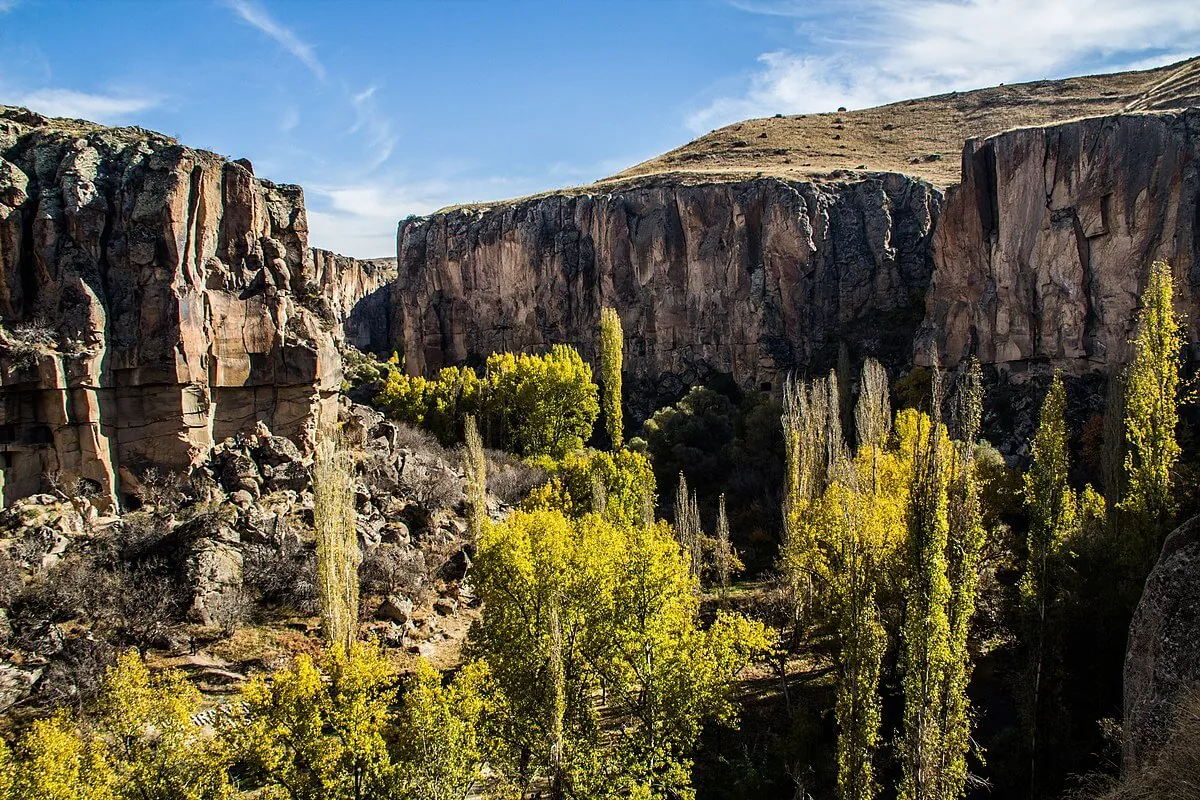
Ihlara Valley is a 14-kilometer-long, 120-meter-deep volcanic gorge formed thousands of years ago by the Melendiz River. Unlike the arid central plains of Goreme, this lush canyon offers a green microclimate sheltering over 100 ancient rock-cut churches, many with remarkably preserved 10th-century Byzantine frescoes. At the valley's dramatic northern end stands Selime Monastery — the largest rock-cut religious complex in Cappadocia, carved into a surreal volcanic landscape often compared to the scenery of Star Wars.
What Makes Ihlara Valley a Unique Hiking Destination?
BLUF: Ihlara Valley is a 14-kilometer-long, 120-meter-deep volcanic gorge formed thousands of years ago by the Melendiz River. Unlike the arid central plains of Goreme, this canyon offers a lush, green microclimate sheltering over 100 ancient rock-cut churches.
14-Kilometer Gorge
The canyon was formed when Mount Hasan erupted and deposited layers of ash and tuff across the region. The Melendiz River, fed by mountain snowmelt, carved through this soft volcanic rock over millennia, creating the deep gorge we see today. The canyon walls rise up to 120 meters on either side, providing natural insulation that creates a microclimate significantly cooler and greener than the surrounding Anatolian steppe. This unique environment made the valley an ideal refuge for early Christian monastic communities fleeing persecution during the Byzantine iconoclastic period (8th-9th centuries).
120-Meter Depth
Accessing the canyon floor requires descending approximately 300 stone and wooden steps from the main entrance near Ihlara village. The descent is the most physically demanding part of the visit — those with knee or mobility concerns should take it slowly. Once on the valley floor, the trail alongside the Melendiz River is mostly flat, shaded by walnut and pistachio trees, and well-maintained. The temperature in the canyon is typically 5-8°C cooler than the plateau above, making it a welcome respite during hot summer days.
What Are the Best Hiking Routes and Difficulty Levels?
BLUF: The most popular and moderate hiking route spans 4 kilometers from the main Ihlara entrance down to Belisirma village. Accessing the canyon floor requires descending approximately 300 stone steps, but the main riverside trail itself is relatively flat and well-maintained.
The 4km Classic Route
The Ihlara-to-Belisirma section is the valley's most rewarding and accessible route. Starting at the main entrance (with ticket booth, restrooms, and a small cafe), you descend the 300 steps to the canyon floor. From here, the well-marked trail follows the Melendiz River northward for 4 kilometers, passing several of the valley's most significant churches along the way. The hike takes approximately 1.5 to 2 hours at a relaxed pace with stops for photos and church exploration. The route ends at Belisirma village, where riverside restaurants await for a well-deserved lunch.
300-Step Entrance & Practical Tips
- Entrance Fee: Approximately 15 EUR (300 TL) as of 2026 — includes access to both Ihlara Valley and Selime Monastery
- Best Season: April-June and September-October for ideal temperatures; July-August can be hot but the canyon shade helps
- Footwear: Sturdy walking shoes or hiking sandals are essential — the path includes uneven stone sections and occasional mud near the river
- Water: Bring at least 1 liter per person; there are limited refill points along the trail
- Guide Tip: A historian guide transforms the experience, identifying hidden churches (many entrances are unmarked) and explaining the theological symbolism in the frescoes
Which Rock-Cut Churches and Frescoes Are Must-Sees?
BLUF: The valley preserves remarkably intact 10th and 11th-century Byzantine frescoes depicting biblical scenes. Key historical sites include Agacalti (Under the Tree) Church, Yilanli (Snake) Church, Sumbullu (Hyacinth) Church, and the Kirkdamalti (St. George) Church located further along the trail.
Agacalti (Under the Tree) Church
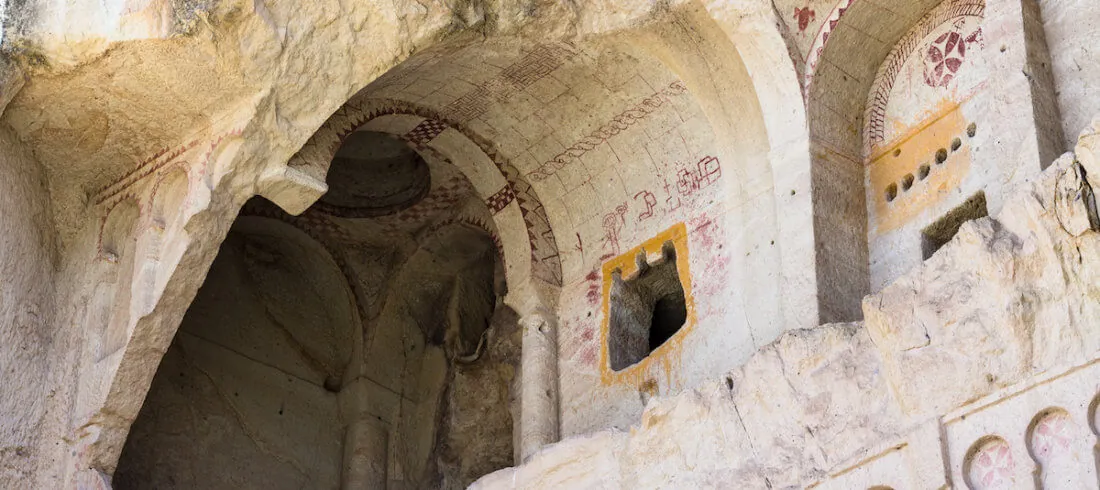
One of the first significant churches encountered along the classic route, Agacalti Kilisesi features a cross-in-square plan with a central dome. The frescoes depict the Annunciation, Nativity, and Crucifixion in the distinctive Cappadocian style — vivid, expressive, and remarkably well-preserved due to the dry cave environment. The church derives its name from the large tree that once sheltered its entrance.
Yilanli (Snake) Church
Named for the dramatic fresco of St. George slaying the dragon (depicted as a serpent), Yilanli Church contains some of the valley's most striking and unusual paintings. The fresco of the Last Judgment is particularly noteworthy, featuring four women being attacked by snakes — a vivid medieval representation of sinners receiving their punishment. The artwork here dates to the 9th-11th centuries and shows strong Syrian and Coptic influences.
Sumbullu (Hyacinth) Church & Kirkdamalti (St. George)
Sumbullu Kilisesi is distinguished by its elegant facade — two levels of arched entryways carved directly into the cliff face — and frescoes featuring floral motifs, including the hyacinth flowers that give the church its name. Further along the trail, Kirkdamalti (St. George) Church is one of the largest in the canyon, with a spacious nave and extensive fresco cycles covering the life of Christ and various saints. Its elevated position offers panoramic views of the valley below.
What is the Historical Significance of Selime Monastery?
BLUF: Selime Monastery marks the dramatic end of the Ihlara canyon and stands as the largest rock-cut religious complex in Cappadocia. This monumental 13th-century cathedral features vast kitchens, monk quarters, and steep tunnels carved into a surreal, "Star Wars"-like volcanic landscape.
Largest Rock Cathedral
Selime Monastery is an awe-inspiring sight — a multi-story religious complex carved entirely into a massive volcanic pinnacle. Unlike the single-chamber churches inside the canyon, Selime is a complete monastic settlement: a vast cathedral-sized church with soaring rock-cut columns, monk cells on multiple levels, communal kitchens with massive chimneys, stables for animals, and a series of steep tunnels connecting the different sections. The scale is genuinely staggering — this was not just a place of worship but a self-sufficient community housing hundreds of monks and pilgrims.
Star Wars Landscape
The volcanic terrain surrounding Selime is dramatically different from the lush valley floor — a stark, almost lunar landscape of wind-eroded tuff formations, conical fairy chimneys, and deep crevices. This otherworldly scenery has been compared to Tatooine from Star Wars, and the area has indeed been used as a filming location. The monastery itself appears to grow organically from the rock, its carved windows and doorways peering out from improbable heights. Climbing to the upper levels rewards you with sweeping views of the entire canyon system.
How Does the Melendiz River Shape the Ecosystem?
BLUF: The Melendiz River acts as the vital artery of the canyon, sustaining a dense green oasis of pistachio trees, vines, and local wildlife. It also provides the perfect setting for traditional riverside dining in Belisirma, where travelers enjoy local meals on wooden pavilions set over the flowing water.
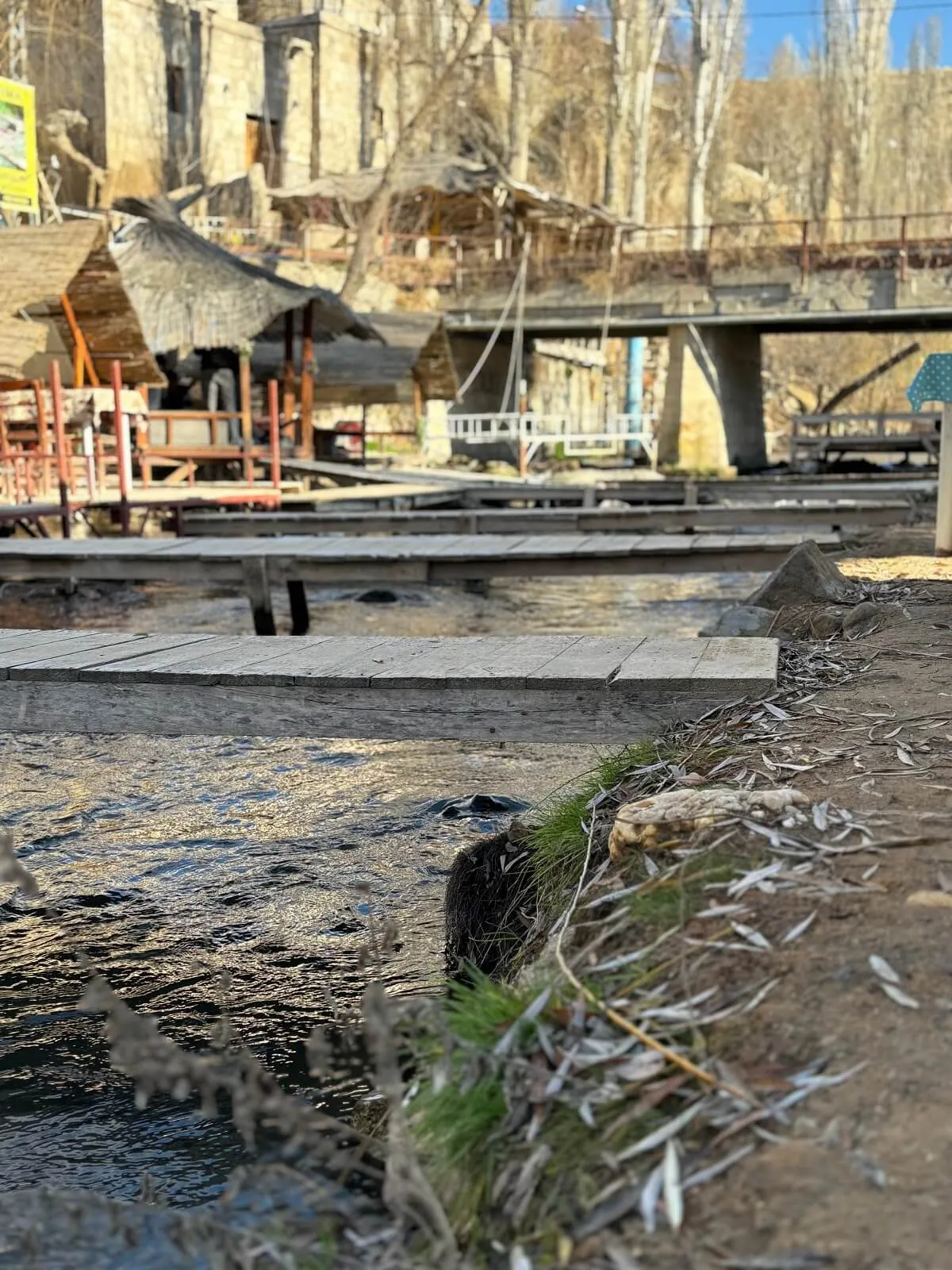
Riverside Dining in Belisirma
The village of Belisirma, at the end of the classic 4 km hiking route, is famous for its riverside restaurants. Wooden pavilions (kosk) are built directly over the Melendiz River, allowing you to dine while the cool water flows beneath your feet. The menu is simple and traditional: freshly caught river trout (alabalik), grilled chicken, mezes, and gozleme (savory stuffed flatbreads) prepared by local village women. A riverside lunch here — the sound of water, the shade of walnut trees, the mountain-fresh air — is one of Cappadocia's most restorative experiences.
Flora and Fauna
The canyon's microclimate supports a surprisingly diverse ecosystem. The valley floor is thick with wild pistachio, almond, and walnut trees, along with grapevines that produce small but intensely flavorful grapes. Birdwatchers can spot golden eagles, Egyptian vultures, and bee-eaters soaring above the canyon. The river itself is home to trout, freshwater crabs, and terrapins. Spring brings a riot of wildflowers, while autumn paints the valley in gold and amber.
Where to Stay: Guzelyurt vs Aksaray Options?
BLUF: For those wishing to stay near the valley, the historical town of Guzelyurt offers quiet stone mansions and a profound Greek-Ottoman heritage just 15 kilometers away. Aksaray provides larger city hotels, though most travelers prefer staying in central Cappadocia (Goreme/Uchisar) and visiting via a private day tour.
Guzelyurt (formerly Gelveri) is a hidden gem — a town of approximately 3,000 residents with an extraordinary collection of Greek Orthodox and Seljuk architecture. Its underground city, the Red Church (Kizil Kilise) with its distinctive crimson stone, and beautifully restored stone mansions-turned-hotels make it a worthy overnight stop for travelers seeking off-the-beaten-path authenticity. Aksaray, the provincial capital 40 km from the valley, offers chain hotels and urban amenities but lacks the charm of Cappadocia's villages.
Logistics: How to Reach Ihlara Valley Securely?
BLUF: Located roughly 100 kilometers southwest of Goreme, reaching Ihlara Valley efficiently requires reliable transport. Temren Travel guarantees utmost punctuality and safety by utilizing 100% private VIP Mercedes Vito vehicles, ensuring a comfortable 1.5-hour drive without the delays of shared buses.
The valley is situated 100 km (approximately 1.5 hours) southwest of Goreme, making it the most distant major attraction in the Cappadocia region. Public transportation is limited and unreliable — dolmus (shared minibuses) run infrequently between Aksaray and the valley villages. Most travelers visit Ihlara as part of a guided Green Tour, which combines the valley hike with Selime Monastery and Derinkuyu Underground City in a single efficiently-planned day. Our private VIP Mercedes Vito transport provides a comfortable, air-conditioned journey with hotel pickup and drop-off, skipping the delays of large bus groups.
Why Choose the Private Green Tour for This Route?
BLUF: Exploring Ihlara and Selime through our Private Green Tour guarantees a strictly "Zero Forced Shopping" itinerary. You gain up to 2 hours of extra free time to hike at your own pace alongside a university-educated historian guide, avoiding the rigid schedules of 40-passenger tourist buses.
The Private Green Tour is the definitive way to experience South Cappadocia. Unlike standard group tours that rush through Ihlara with 40+ people and mandatory shopping stops, our private experience adapts to your pace and interests — spend extra time photographing frescoes, enjoy a longer riverside lunch, or climb deeper into Selime Monastery's tunnels. Your historian guide provides cultural and theological context that transforms the visit from a simple walk into a journey through 1,000 years of Byzantine monastic history.
Frequently Asked Questions
How long is the Ihlara Valley hike?
The entire Ihlara Valley gorge spans 14 kilometers. However, the most popular and manageable hiking route for visitors starts at the main Ihlara entrance and concludes 4 kilometers later at Belisirma village, taking approximately 1.5 to 2 hours at a relaxed pace with stops for churches and photos.
What is the entrance fee for Ihlara Valley in 2026?
In 2026, the entrance fee for Ihlara Valley is approximately 15 EUR (around 300 TL). This ticket also grants you access to the nearby Selime Monastery. Museum entrance fees are not included in Temren Travel tour prices — you only pay for the sites you visit. Your Private Green Tour guide provides fast-track skip-the-line access at every entrance, including Ihlara Valley and Selime Monastery, so you never wait in long queues.
Is the Ihlara Valley hike difficult?
The hike is generally considered easy to moderate. The main physical challenge is descending the 300 wooden and stone steps at the primary entrance. Once on the canyon floor, the path alongside the Melendiz River is mostly flat, shaded by trees, and clearly marked. It is suitable for anyone in reasonable health.
Can you swim in the Melendiz River?
While the Melendiz River creates a lush, beautiful ecosystem, swimming is not permitted or recommended due to strong undercurrents in certain areas and conservation regulations. However, you can relax right above the water in the traditional wooden dining pavilions (kosk) at Belisirma village — a truly memorable experience.
What is Selime Monastery famous for?
Selime Monastery is famous for being the largest rock-cut religious complex in Cappadocia, dating back to the 13th century. It features a cathedral-sized church, monk quarters on multiple levels, vast communal kitchens, and steep tunnels — all carved into a dramatic volcanic pinnacle in a landscape often compared to Star Wars.
Does the Green Tour go to Ihlara Valley?
Yes. The Ihlara Valley hike and the visit to Selime Monastery are core highlights of the South Cappadocia (Green) Tour. Choosing our Private Green Tour ensures you experience these remarkable sites with a licensed historian guide and absolutely zero forced shopping stops — your entire day is dedicated to nature, history, and culture.